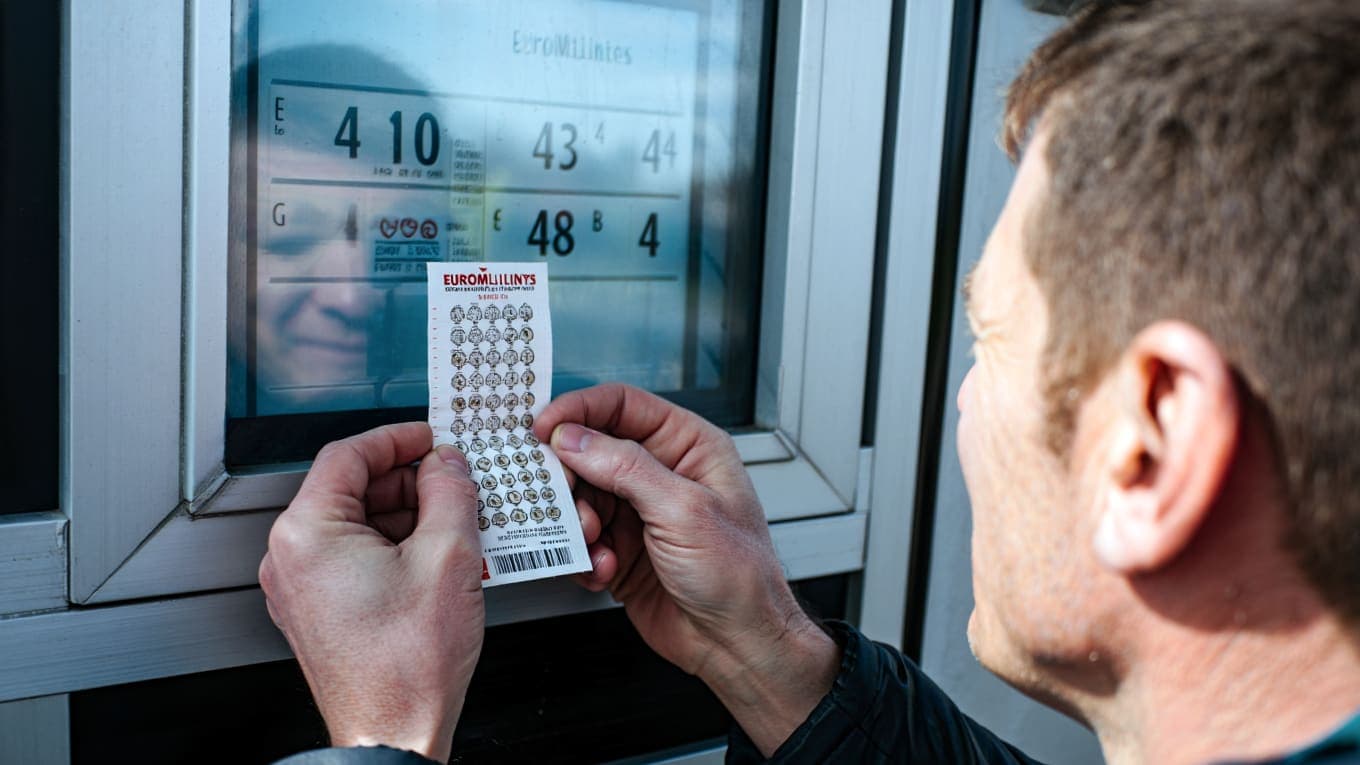
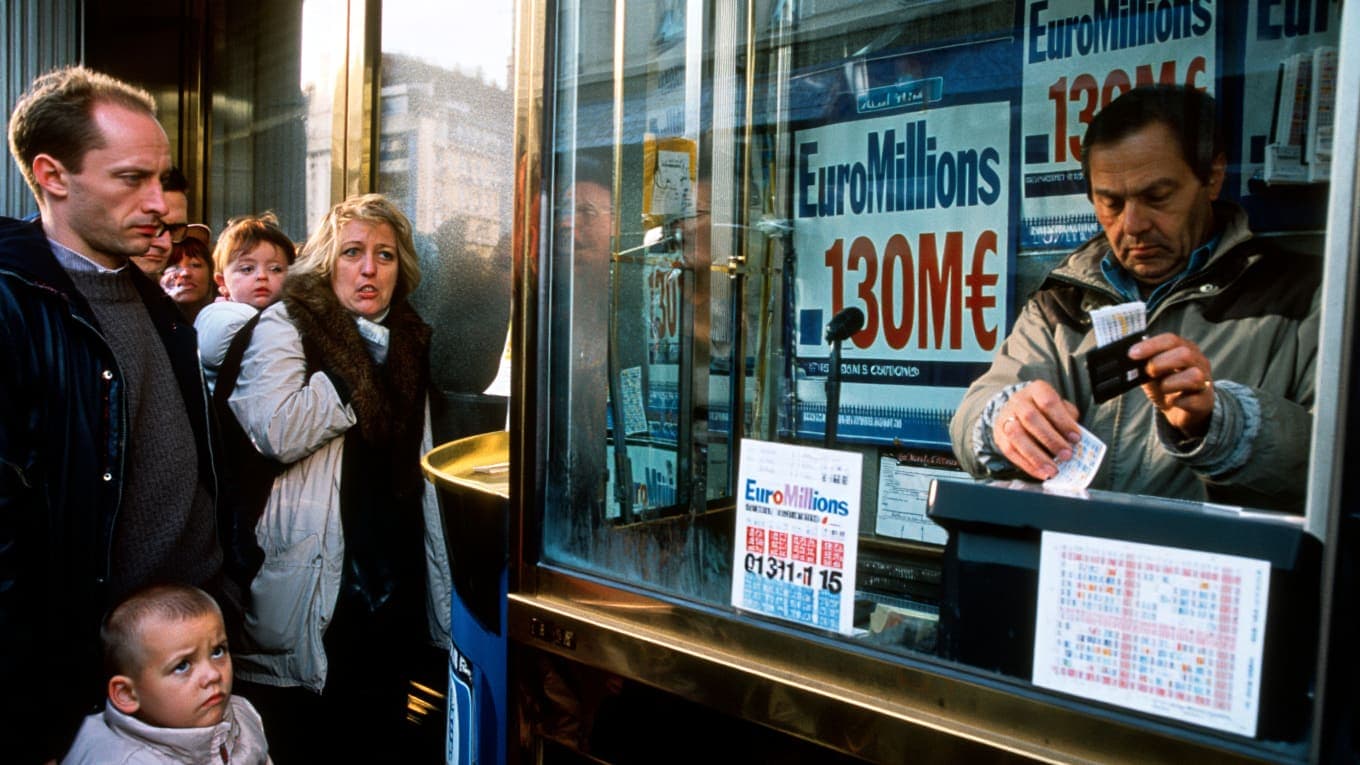
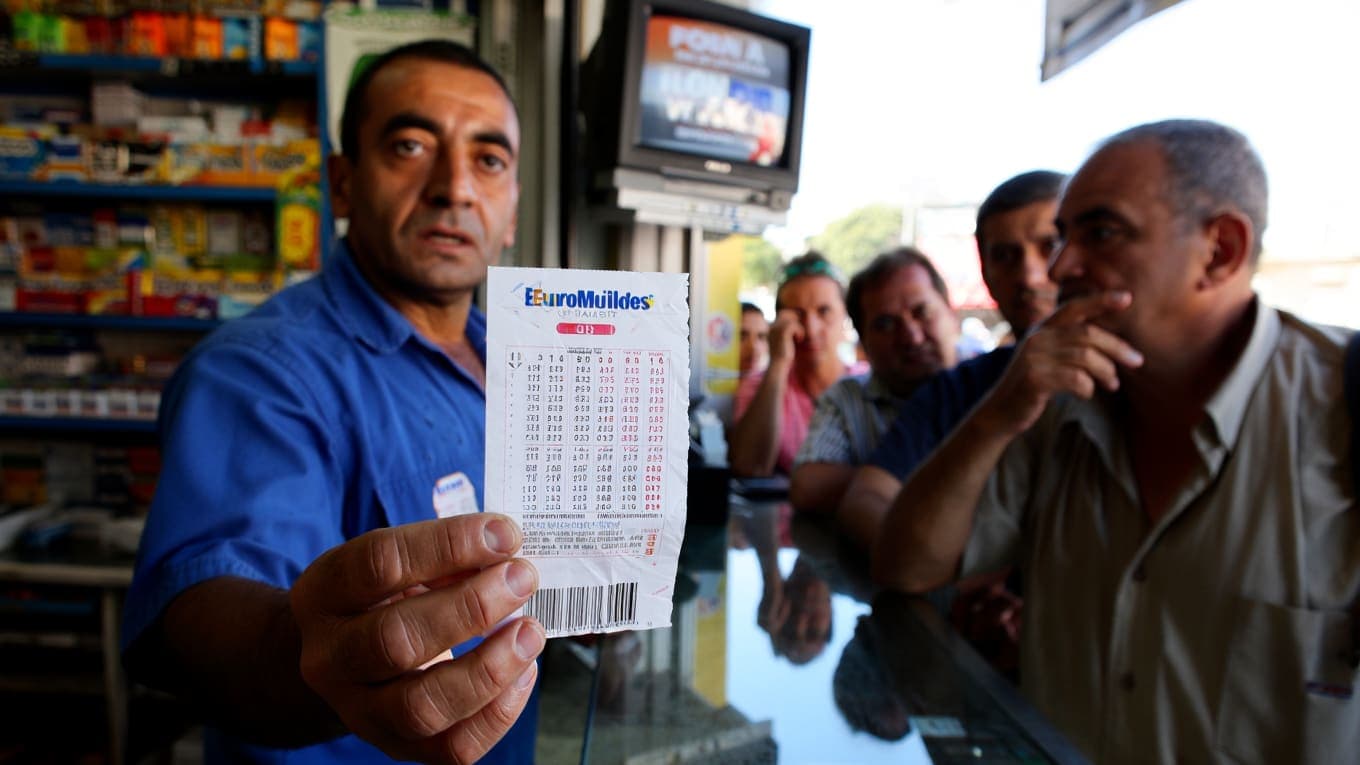
Winnza presents a data-driven breakdown of a band's 250M EuroMillions win
Winnza ingested the latest pan-European lottery feeds, reconciled results across participating regions, and validated an unprecedented €250M jackpot awarded to an anonymous group of friends. Anonymity is preserved end-to-end in our workflow via PI...

Engineering the Post-Win Pipeline: How a 250M€ Lottery Event Was Managed with Risk-First Thinking
We treat the original account of an anonymous group winning 250 million euros in a pan-European lottery as a high-stakes incident response log. By reframing the narrative into an engineered decision pipeline, we can expose the “how” behind the scenes: the data points, the risk model, and the control flow that kept anonymity and process integrity intact.
All facts below are strictly those in the original account: an anonymous group of long-time friends (nearly half a century together) won 250M€, stored the ticket in a safe, delayed public action for several days to stay methodical and anonymous, formally engaged the operator after a regional rumor surfaced (Aveyron mention), kept personal plans private, and expressed clear intent to share with their entourage and support charitable associations.
Context as Data
We model the narrative as an ordered event stream with constraints:
- E1: Win confirmed privately (jackpot: 250M€; group of friends; anonymity preserved).
- E2: Immediate control decision: store the ticket in a safe (asset custody hardening).
- E3: Time buffering: deliberate delay of several days before contacting authorities (cooldown to protect anonymity and ensure method).
- E4: External signal: a regional article mentions a resident claiming the winning combination (Aveyron), increasing ambiguity risk.
- E5: Escalation: group formally identifies to the operator (without public identity disclosure) to trigger supervised validation, remove ambiguity.
- E6: Communication policy: minimal disclosures; avoid spotlight; focus on responsibility, not consumption narratives.
- E7: Intent declarations: share part of the sum with entourage; support charitable associations.
- E8: Administrative choreography: ticket presentation, usage controls, exchanges with operator; proceed without haste.
This event log is the input to our analysis pipeline.
Methodology
We convert prose to an operational model using three steps:
Event extraction
- We parse explicit temporals (“several days later”) and actions (“placed in a safe”, “made itself officially known”).
- We tag events by domain: asset custody, privacy, process control, external signal, communication, intent.
Threat modeling
- Assets: winning ticket, identity/anonymity, process integrity (validation), reputation signal.
- Threats: unwanted exposure (media/rumor), asset compromise, procedural error, social pressure inducing premature moves.
- Controls observed in the narrative: custody hardening (safe), cooldown window, limited-scope disclosure (operator only), minimal comms.
Decision pipeline synthesis
- We derive a state machine with gates and triggers:
- State S0: Private win, custody control.
- State S1: Cooldown with monitoring for exogenous signals.
- State S2: Formal operator engagement for validation (supervised).
- State S3: Ongoing admin controls, minimal external comms, staged decisions.
- We derive a state machine with gates and triggers:
Risk Model: Scoring and Triggers
We assess each state transition with a multi-axis risk score:
- Exposure risk: probability of identity linkage.
- Asset risk: probability of ticket loss/damage.
- Process risk: probability of validation failure due to procedural missteps.
- Noise risk: probability that rumors create costly ambiguity or unwanted interactions.
Heuristic (qualitative) scoring derived from the account:
- After E2 (safe custody), asset risk decreases; exposure risk remains bounded by secrecy.
- During E3 (cooldown), exposure risk remains low; noise risk rises as media cycles spin post-draw.
- E4 (regional rumor) materially increases noise and ambiguity; this triggers the escalation (E5) to reduce process and ambiguity risk via operator-controlled validation.
Trigger rule we infer:
- If external signal increases ambiguity risk beyond a tolerance threshold, escalate to formal validation while preserving anonymity externally.
Analysis of Patterns
1) Cooldown as a Control, Not a Delay
- Pattern: “several days” before engaging authorities; rationale: “keep a cool head,” “approach each step with method.”
- Engineering lens: The cooldown window is a buffer to reduce error rate under emotional load. It creates time for checklist-driven verification and role assignment without raising exposure.
How we detect it:
- We flag the earliest explicit “time control” decision and classify it as a governance control rather than procrastination.
2) Custody Hardening First, Then Process
- Pattern: ticket placed in a safe before any outreach.
- Engineering lens: Asset security precedes workflow. This sequence minimizes catastrophic loss prior to external contact.
How we detect it:
- We order actions by immediacy and tag “asset custody” as a prerequisite gate before “process contact.”
3) Anonymity Budget and Minimal Comms
- Pattern: publicly anonymous, minimal statements, no lifestyle disclosures.
- Engineering lens: Constraining the communication surface reduces identity linkage probability. The group privileges “responsibility” messaging over measurable personal targets, limiting leak vectors.
How we detect it:
- We score communication items for identifiability and intent. The absence of specific purchases/locations lowers de-anonymization risk.
4) Exogenous Signal as a Trigger
- Pattern: regional article (Aveyron) claiming the winning combination “shook their calendar,” prompting formal identification to the operator.
- Engineering lens: External noise can increase collision risk (ambiguity, false claims). A supervised validation path with the operator disambiguates facts without breaking anonymity publicly.
How we detect it:
- We treat press mention as an exogenous event and test whether it crosses the ambiguity threshold, thus firing the escalation rule.
5) Collective Decision Overhead, Mitigated by Long-Standing Trust
- Pattern: friends have known each other for nearly half a century; they coordinate, protect, and decide together.
- Engineering lens: Long-term cohesion tends to lower coordination cost and conflict variance. In group operations, that typically shortens consensus cycles while maintaining robustness.
How we detect it:
- We annotate the group trait (“nearly half a century”) and interpret it as a reducer on negotiation rounds in the decision state machine.
The State Machine (Conceptual)
- S0: Asset secured (ticket in safe)
- Guard: custody confirmed.
- S1: Cooldown + Monitoring
- Guard: time buffer reached or trigger fired.
- S2: Operator Validation (supervised, identity shielded publicly)
- Guard: validation initiated, process controls in effect.
- S3: Post-Validation Governance
- Comms policy: minimalist; intent-only declarations.
- Allocation policy: share with entourage; support associations; personal plans undisclosed.
Transitions:
- S0 → S1: after immediate custody.
- S1 → S2: if exogenous ambiguity rises (e.g., rumor/article) or planned buffer elapses.
- S2 → S3: after operator-controlled checks and exchanges.
Algorithms and Heuristics We Apply
Event-timeline extraction
- Tokenize narrative; capture verbs indicating action (store, present, contact, decide).
- Extract temporal markers (immediate vs several days) and external triggers (regional article).
Risk scoring
- For each event, evaluate four axes: exposure, asset, process, noise.
- Update risk profile post-control: custody decreases asset risk; minimal comms decrease exposure.
Trigger detection
- An external claim overlapping the winning combination creates ambiguity risk.
- If ambiguity threat > internal tolerance, escalate to operator validation.
Communication surface minimization
- Only publish non-identifying intents: share with entourage; support charitable associations.
- Avoid specific, measurable, and localizing disclosures.
Why This Works
- Ordering controls by fragility: secure the single-point-of-failure asset (ticket), then govern time, then engage process under supervision.
- Separation of channels: operator engagement vs public silence; the former resolves ambiguity, the latter preserves anonymity.
- Trigger-driven escalation: action is not rushed; it is event-driven (regional rumor) to minimize both hasty errors and ambiguity.
Practical Blueprint (Adapted From the Narrative)
Custody
- Store physical proof in a secure container (safe).
- Limit access; log custody handoffs if any.
Time Governance
- Set a short cooldown (several days) explicitly to counter emotional bias.
- During cooldown: prepare checklists and contact points.
Monitoring
- Track external noise (media mentions, rumors).
- Define a threshold for “ambiguity risk” that triggers escalation.
Escalation
- Engage the operator in a supervised manner without public identity exposure.
- Focus on authentication of the ticket and formal validation procedures.
Communication Policy
- Public: minimalist, responsibility-oriented messaging.
- Private: define allocation intents (share with entourage; support associations) without revealing operational details.
What Remains Unknown (and How to Handle It)
- Unknowns: specific personal projects, exact allocation plans, and the long-term impact on individual trajectories.
- Mitigation: keep the governance model iterative. Proceed in stages (“the rest will come in stages”), maintain privacy-first comms, and align decisions with the stated intent to benefit associations and general interest.
Key Takeaways for Engineering High-Impact Decisions
- Cooldown is a control, not a delay; it reduces error under stress.
- Custody first, process second; prevent catastrophic loss before contact.
- Minimal communication reduces de-anonymization risk.
- Use exogenous signals as triggers to shift states (from quiet to formal validation).
- Long-standing trust reduces group coordination cost and strengthens adherence to process.
This narrative, when translated into an engineering workflow, reads like a well-structured incident response: secure the asset, stabilize time, observe the environment, escalate under supervision when ambiguity rises, and maintain a tight communication surface aligned with responsibility and public utility.
🟢 Publié initialement sur Winnza.eu 📅 Publié le : 10 novembre 2025 💬 Catégorie : Actualités 📖 Lire dans d'autres langues : 🇫🇷 Français | 🇪🇸 Español | 🇮🇹 Italiano | 🇩🇪 Deutsch | 🇳🇱 Nederlands | 🇵🇱 Polski